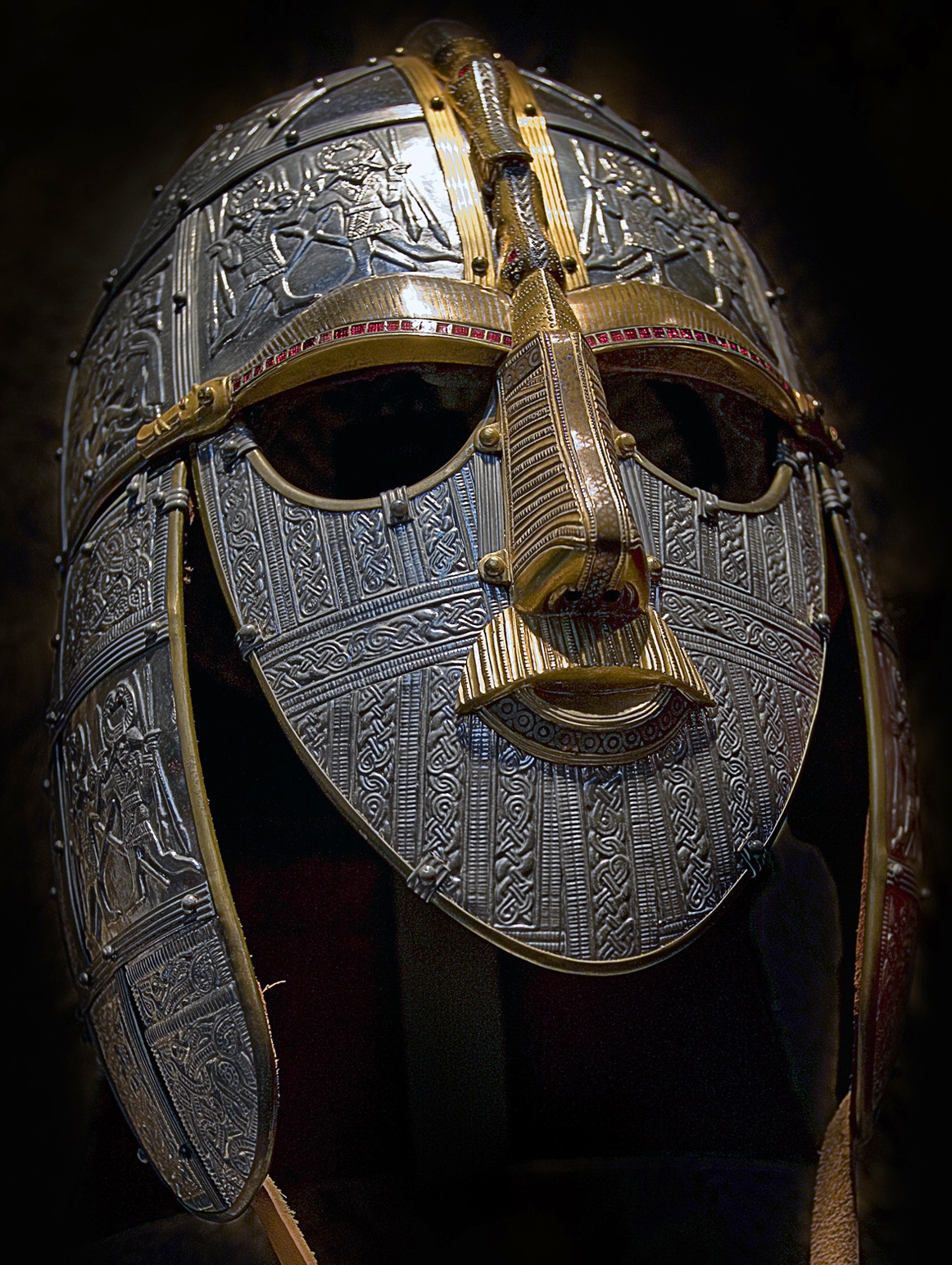
Sutton Hoo material
Room 41. The helmet, shoulder clasps and garnet fittings from the ship burial of the 620s.
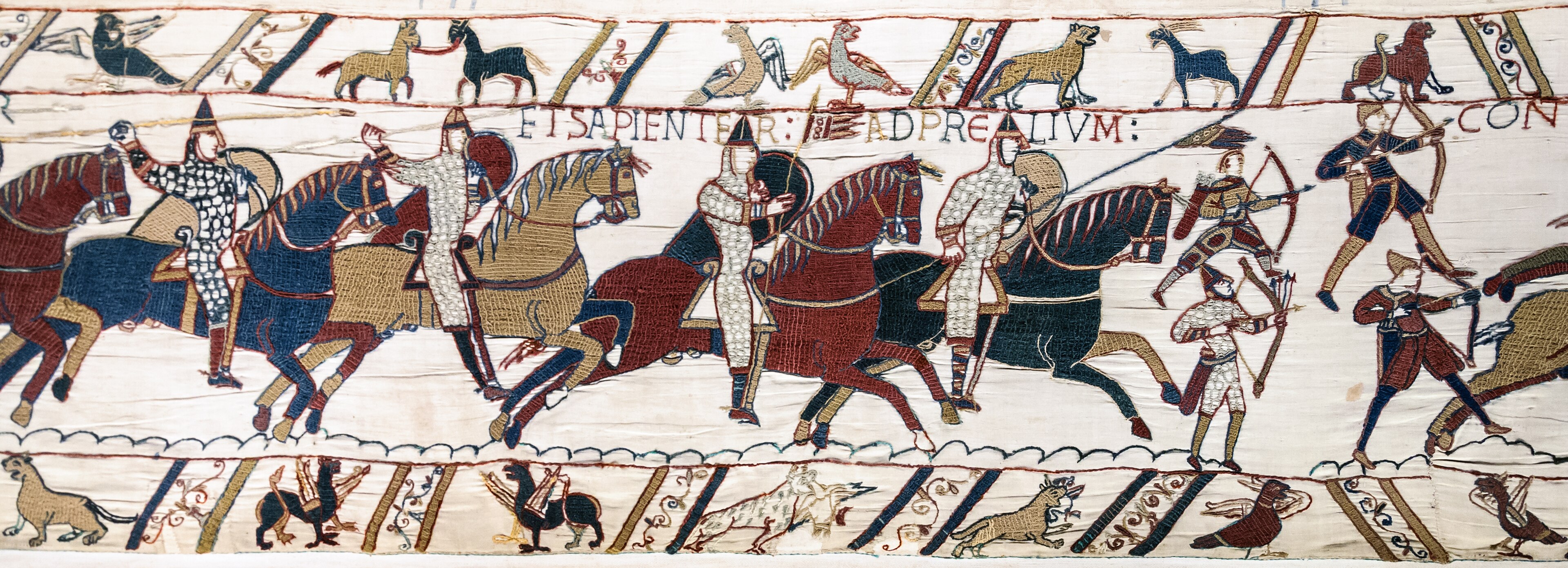
The Tapestry is not a tapestry. It is wool embroidery on linen, worked in eight colours and nine joined panels, and it has survived nine and a half centuries of war, revolution, requisition and rain.
Made within about a decade of the events it shows, probably in Canterbury and for a Norman patron, it runs from Harold's oath in Normandy to the flight of the English at Hastings. Fifty-eight scenes, more than six hundred human figures, two hundred horses, and a Latin commentary stitched above the action. The final scenes are missing; nobody knows how it ended.
The loan comes to Bloomsbury while the Bayeux Museum in Normandy is rebuilt, as part of an exchange in which the Museum sends Anglo-Saxon and Norman material, Sutton Hoo and the Lewis Chessmen among it, to France. It is the first time the embroidery has left French soil in living memory.
The exchange loan takes Anglo-Saxon and Norman material to Normandy while the Bayeux Museum is rebuilt. All three are on display in Bloomsbury until the loan begins.
Room 41. The helmet, shoulder clasps and garnet fittings from the ship burial of the 620s.
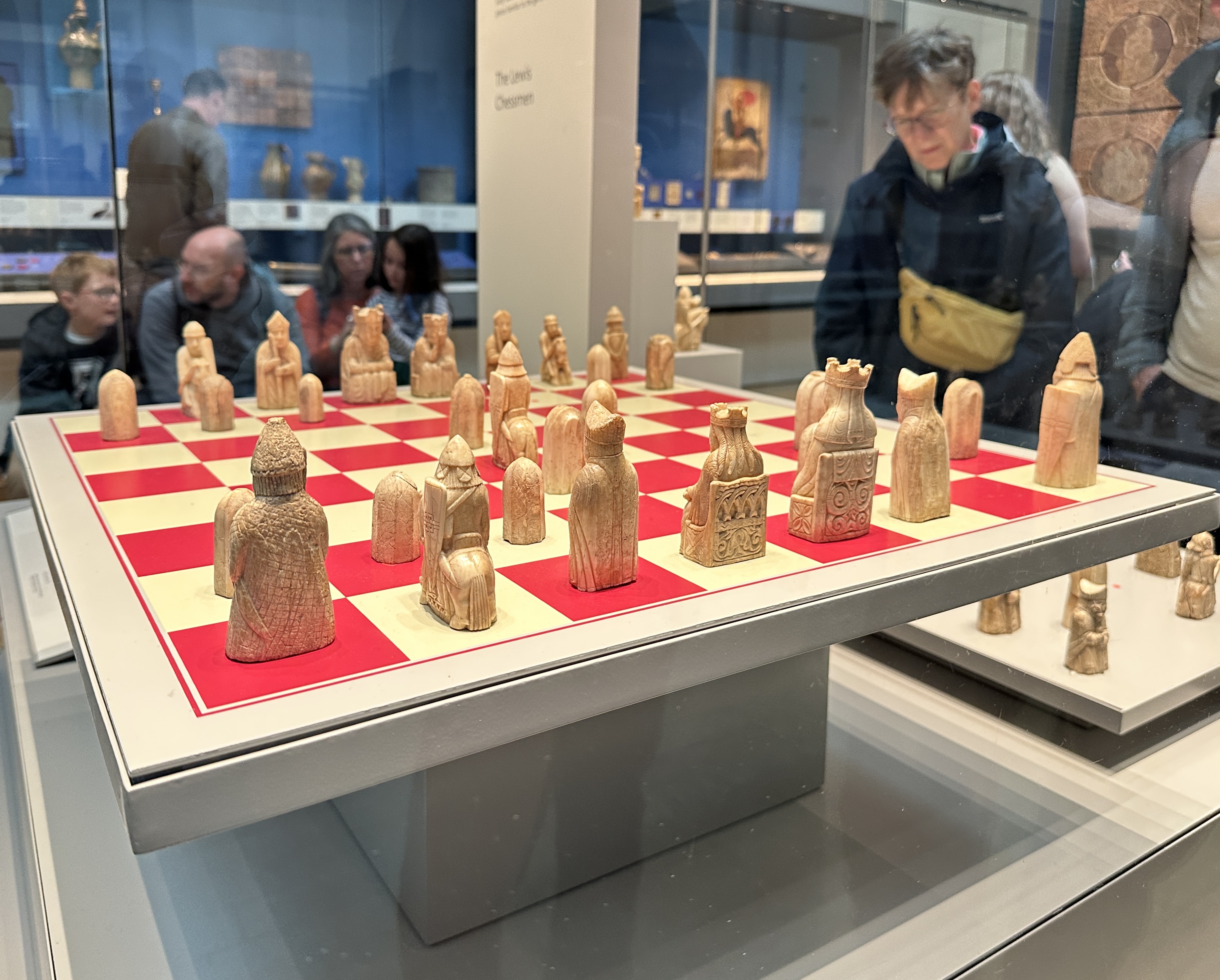
Room 40. Walrus ivory carved in Norway around 1150 and found in the Hebrides.
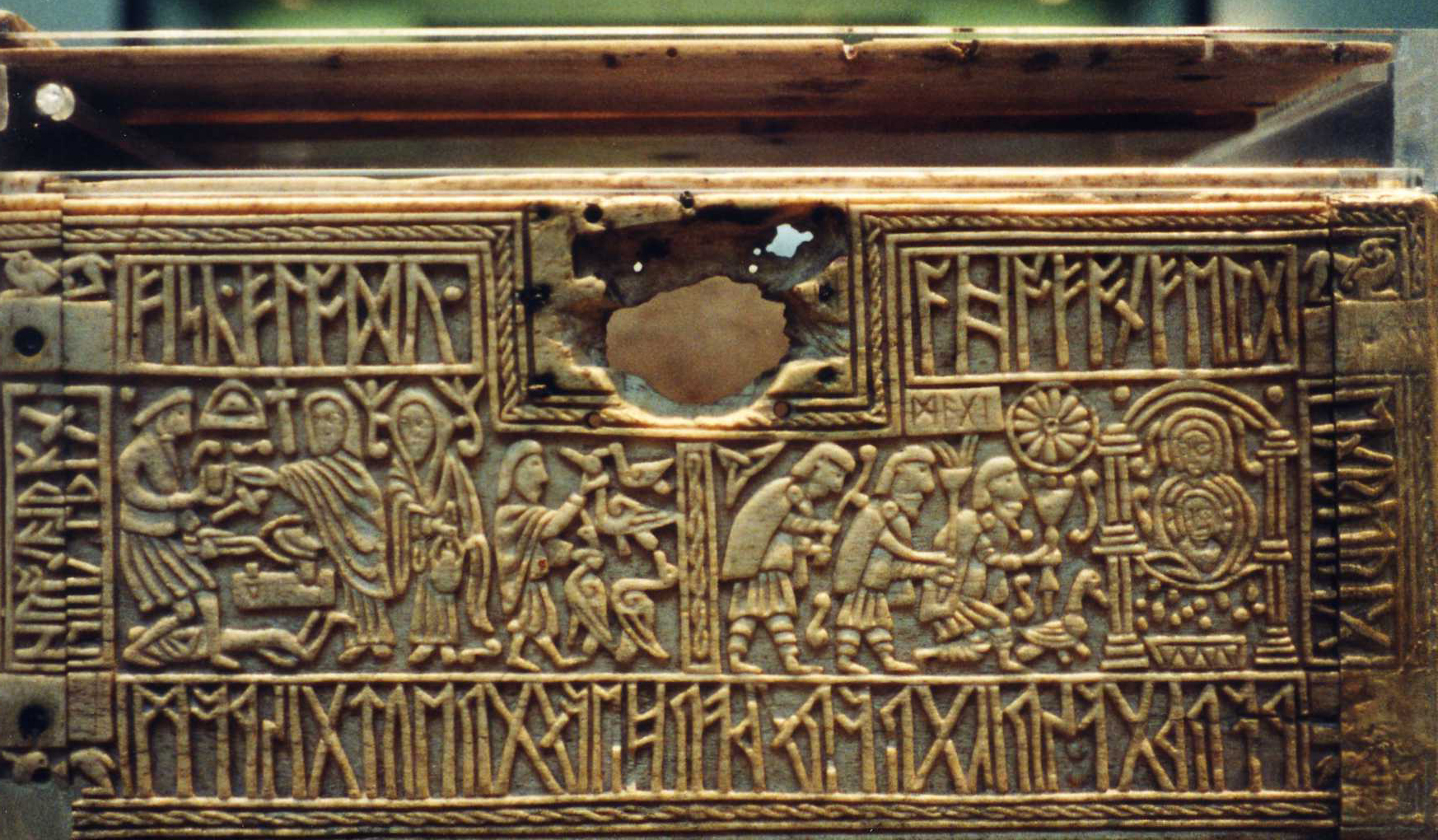
Room 41. Whale bone carved in Northumbria around 700, with runes switching between Old English and Latin.