The Bayeux Tapestry
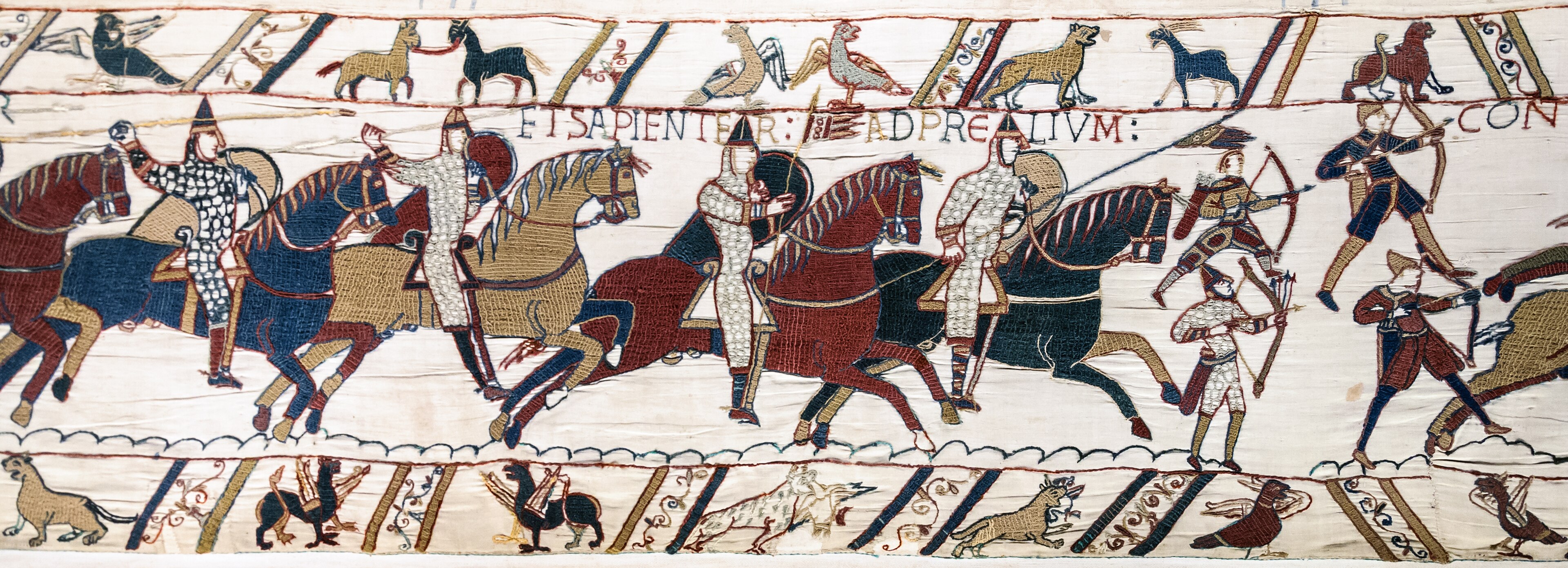
A historic loan from France: nearly seventy metres of embroidered linen, shown in Britain for the first time. Part of an exchange that sends Sutton Hoo and Lewis Chessmen material to Normandy.
Read more and bookFounded 1753 · Opened to the public 1759
Eight million objects from every inhabited continent, held in trust for the world in Bloomsbury since 1753. Open daily. Free to enter.
The permanent collection is free to all. Some exhibitions are ticketed; Members enter those free.
Last entry {{ hours.lastEntry }}. Closed 24, 25 and 26 December and 1 January.
London WC1B 3DG. Tottenham Court Road, Holborn and Russell Square are each a short walk.
Plan your visitTicketed shows sit on dark ground, free displays on pale. Members go free to everything, and book before anyone else.
See all
A historic loan from France: nearly seventy metres of embroidered linen, shown in Britain for the first time. Part of an exchange that sends Sutton Hoo and Lewis Chessmen material to Normandy.
Read more and book
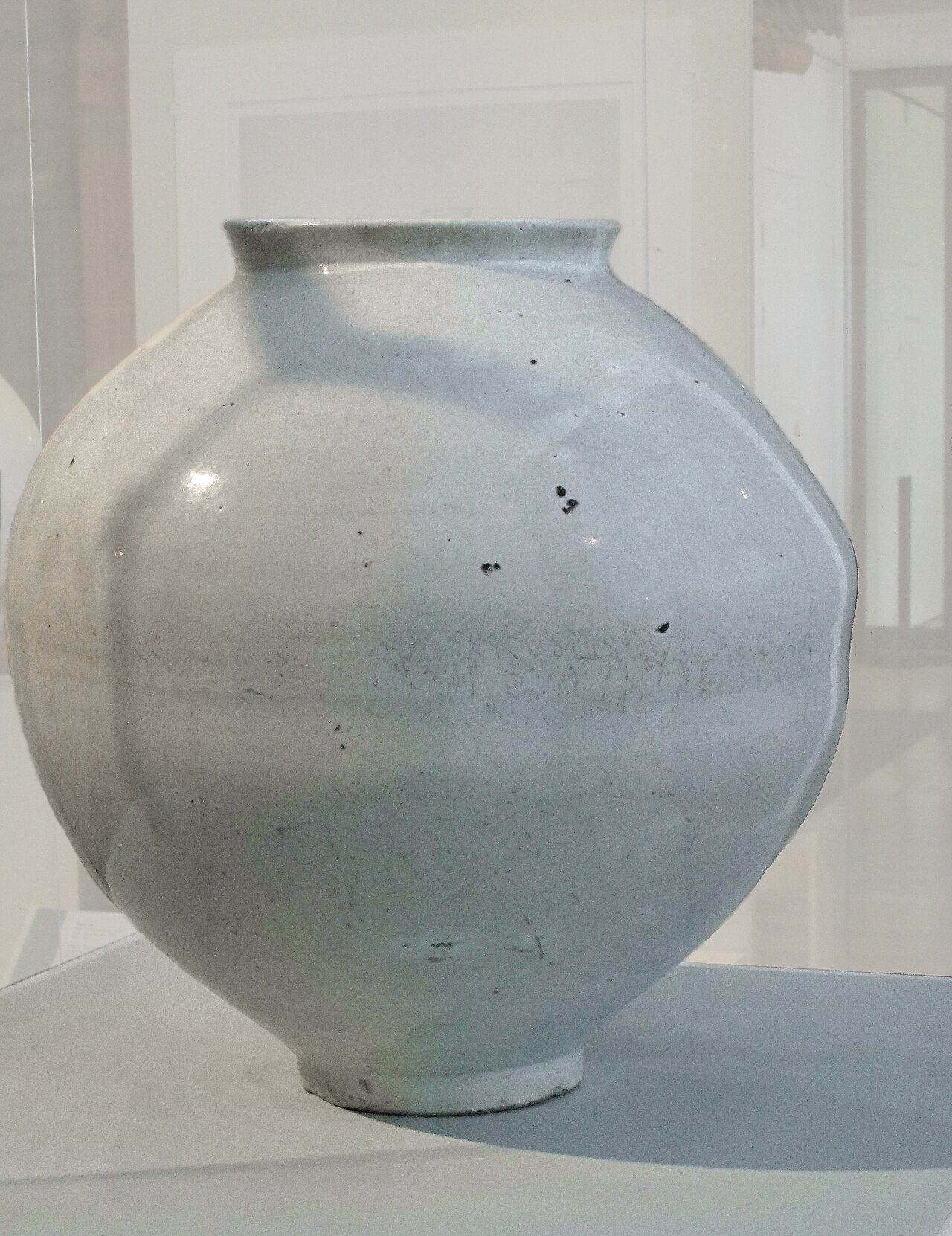
A century of making and remaking, drawn from the Museum's Korean collection and lenders in Seoul.
Book nowSixty one objects on display in the building today, drifting past in three rows. Rest the pointer anywhere on them to slow everything down, then select one to read it and open its record.
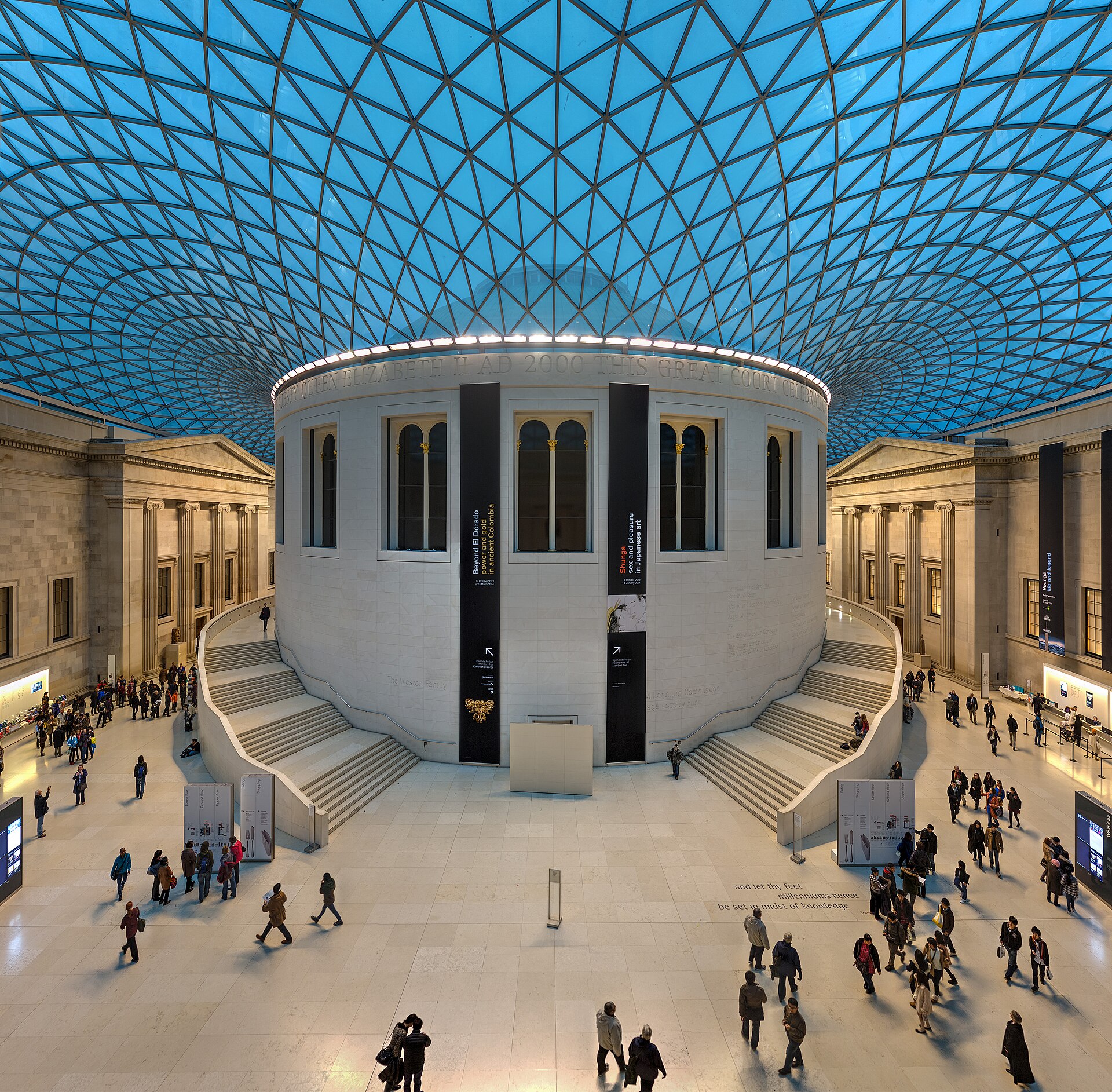
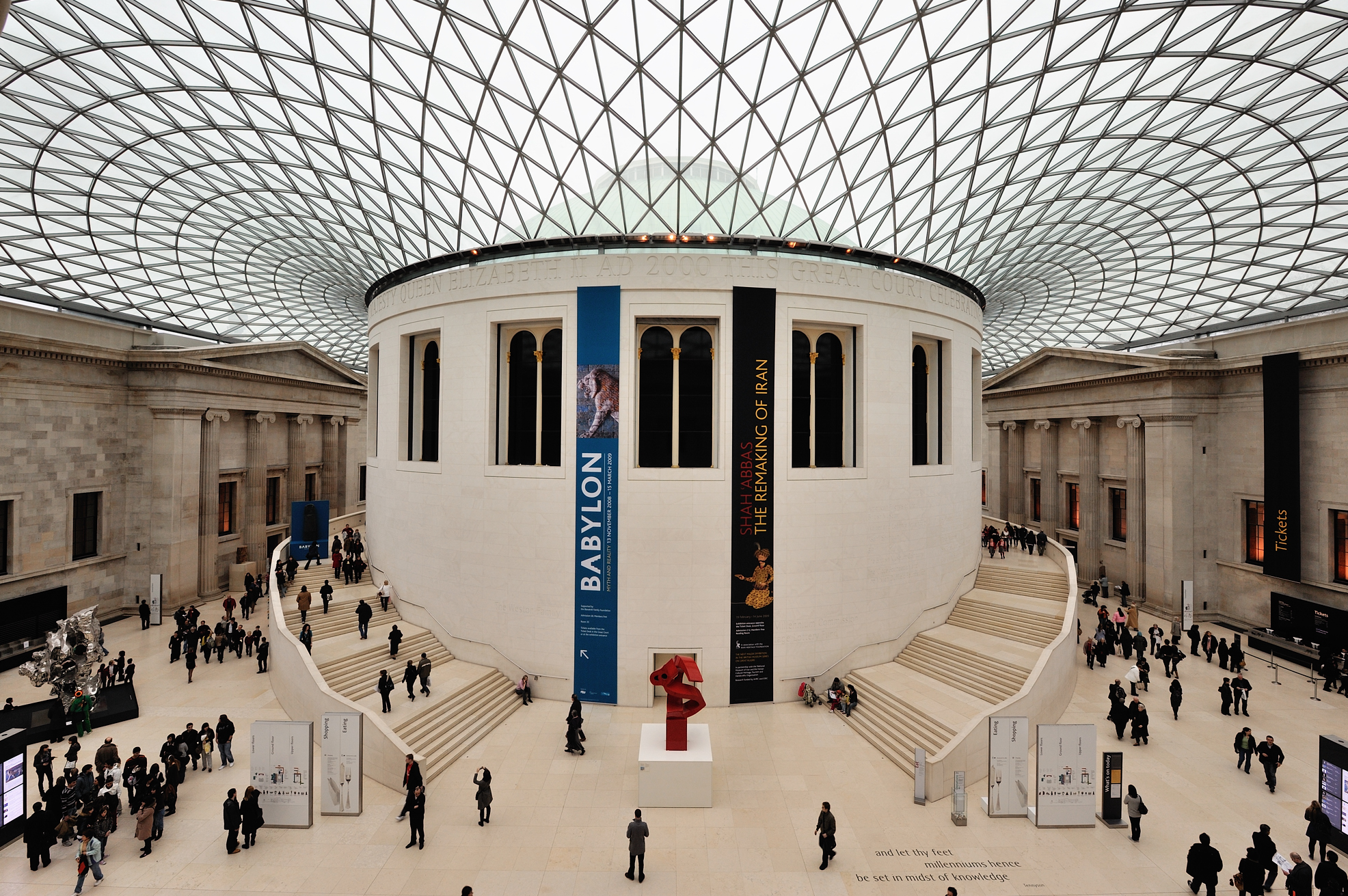
Robert Smirke's Greek Revival quadrangle rose between 1823 and 1852, forty-four Ionic columns deep. In 2000 Foster + Partners roofed its lost courtyard in a lattice of 3,312 panes, no two identical, making the largest covered public square in Europe.
The Round Reading Room, 1857. Sydney Smirke's dome, wider than St Paul's, where the reading public worked before the British Library moved out in 1997.
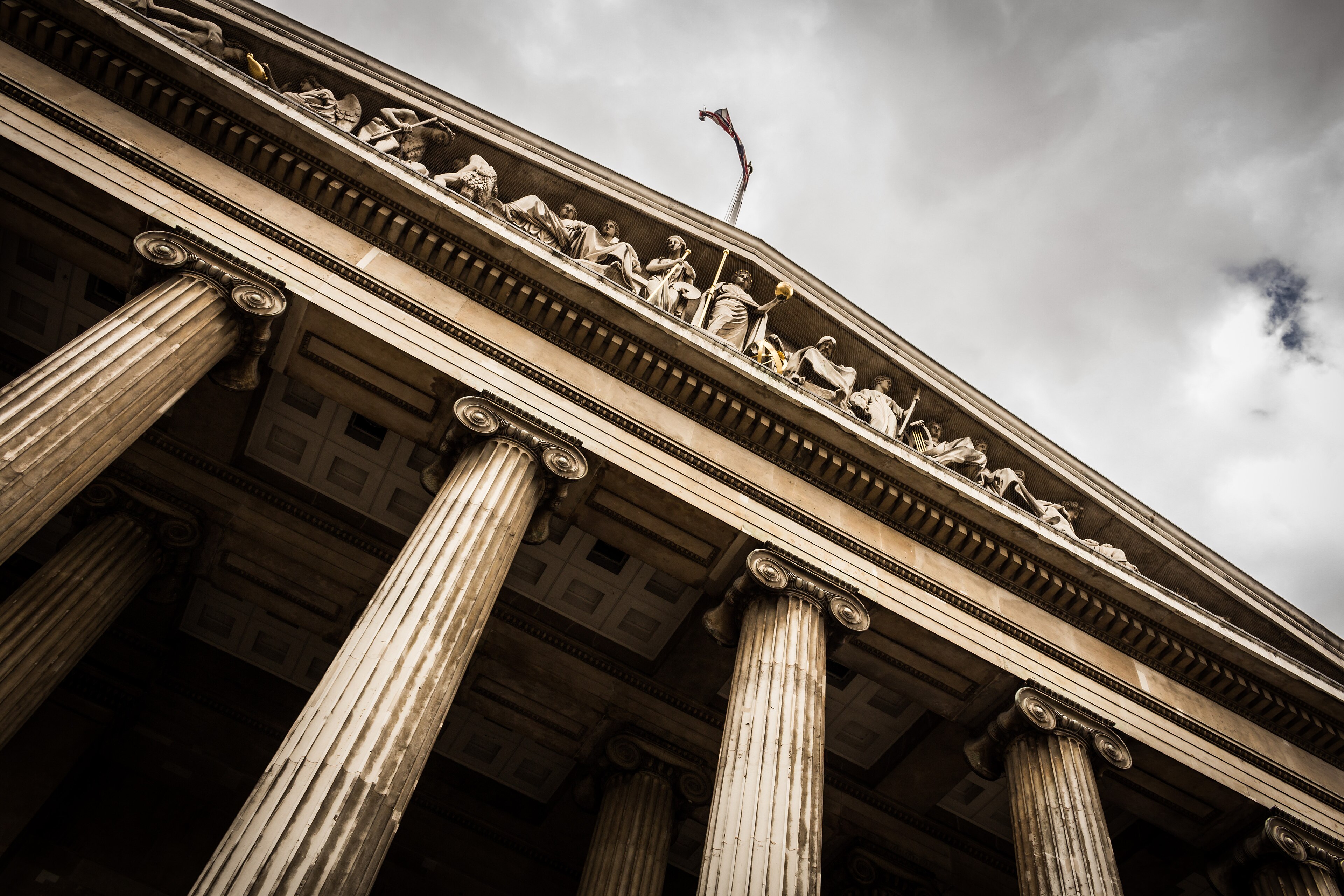
The south portico. Eight Ionic columns carry Richard Westmacott's pediment, The Progress of Civilisation, completed in 1852. Forty-four columns run the length of the front.
The Museum began as one man's cabinet. Sir Hans Sloane, physician and collector, left some 71,000 objects, books and natural specimens to the nation on his death, and in 1753 Parliament bought them for the country. Six years later, on 15 January 1759, the collection opened at Montagu House in Bloomsbury, free of charge, to any studious and curious person who applied. No museum anywhere had done that before.
What followed was two centuries of growth that eventually broke the house: the King's Library, Egyptian and Assyrian sculpture, the Parthenon marbles, ethnographic collections from every ocean. Smirke's quadrangle replaced Montagu House to hold it. The natural history collections left for South Kensington in 1881; the books left for St Pancras in 1997. What remains is a collection of human making, from a Tanzanian handaxe to a print pulled last year, and a founding condition that has never been withdrawn: entry is free.
Sloane's own catalogue numbers are still legible on some objects, in ink, in his hand.
The Museum holds roughly eight million objects; around 80,000 are on display at any time, and four million can be searched online.
An hour, a morning, or a single room. Each trail is a route through real room numbers with a curator reading aloud.
Trails and the audio app{{ t.body }}
Free unlimited entry to every exhibition, priority booking, the Members' Room above the Great Court, and the Museum's magazine.
Casts, prints, jewellery after objects in the galleries, and the exhibition catalogues. Every purchase supports the Museum.
Donations keep the doors open, the galleries lit and the conservation studios working. Give once, or monthly.
Four million object records are searchable online, with images released for non-commercial use. Beyond the galleries: conservation and scientific research, study rooms open by appointment, fieldwork and training partnerships, and the Portable Antiquities Scheme recording finds made across England and Wales.
Four million records, by object, place, maker or date.
See objects not on display, by appointment with a curator.
Analysis, treatment and the technical study of materials.
Free self-led visits, sessions and classroom resources.
{{ study.body }}